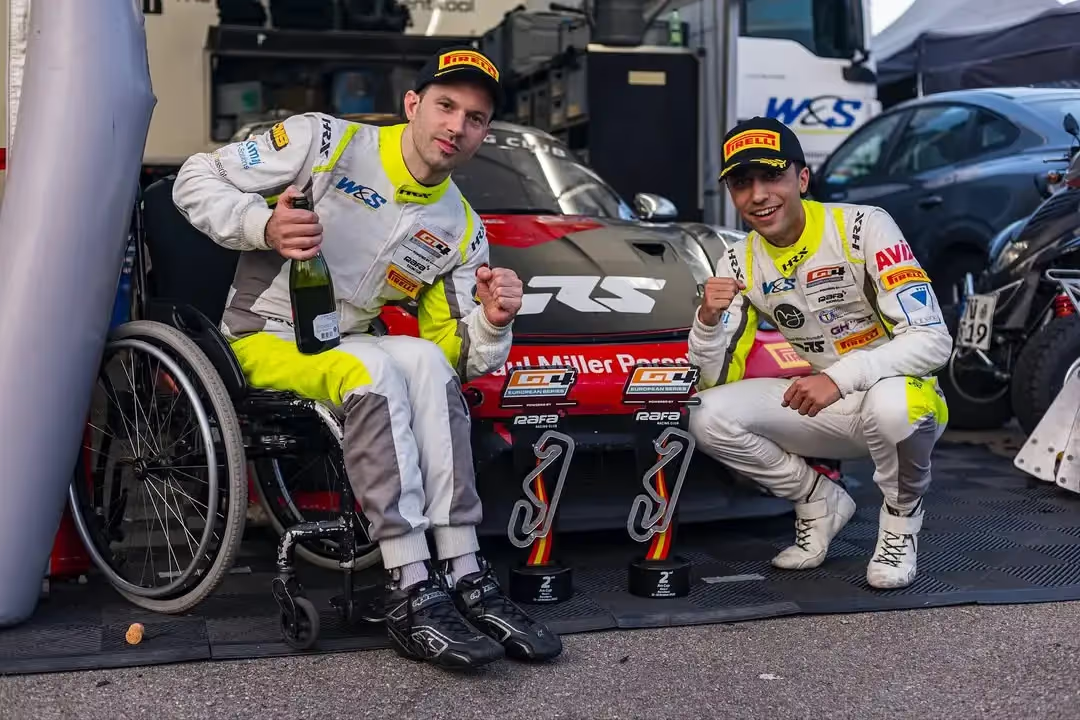
Track Blazer Spotlight: Robert Wickens
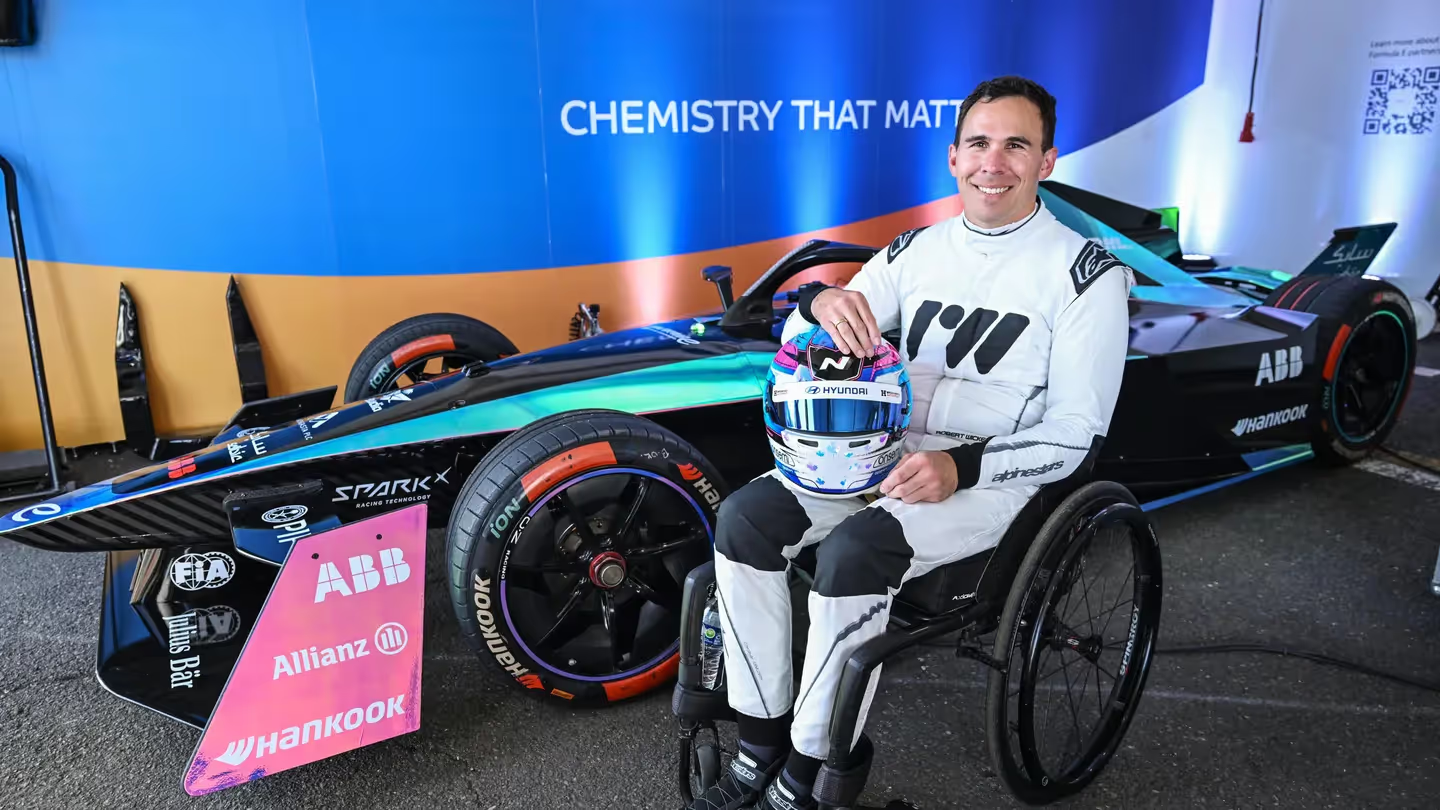
Four years after a crash that changed his body and his career, Robert Wickens returned to professional racing by rethinking how a race car could be driven — and still come out on top. In 2026, he was inducted into the Canadian Motorsports Hall of Fame, recognizing not only his competitive success, but the broader impact of his return to the sport.
Long before his name became synonymous with resilience, Wickens was simply known as fast. He was a natural from the start, climbing through the ranks with quiet confidence, earning championships overseas and proving himself on some of the world’s most competitive grids. By the time he entered the IndyCar Series in 2018, it was clear he belonged there. His rookie season was shaping up to be something special. Until it abruptly ended.
The Crash that changed everything
In August of 2018, a high-speed crash at Pocono Raceway left Wickens with a spinal cord injury at the T4 level, resulting in paraplegia. The immediate questions were no longer about lap times or podiums, but about daily life. The recovery that followed was extensive and uncertain. What was clear, however, was his determination to return to racing, albeit with a different setup.
When Wickens began working toward a return, adapting the vehicle became part of the process from the start. Driving would now rely entirely on hand controls—acceleration, shifting, and braking all routed through the steering wheel. For a driver accustomed to braking at speed with precision and feel, this wasn’t a simple adjustment. It demanded systems that could respond consistently, predictably, and without compromise.
A Return to the top
In 2022, four years after his crash, Wickens returned to competition full-time in the IMSA Michelin Pilot Challenge. Lined up against more than fifty cars on major road courses, he raced using a fully hand-controlled system—managing every input with his upper body alone.
In his first race back at Daytona, he stood on the podium. Five races later, he took his first win, and by the end of the season, after just twenty races, Wickens secured the series championship.
And recently, in 2026, Robert Wickens was inducted into the Canadian Motorsports Hall of Fame, a recognition not just of speed, but of transformation, and competitive excellence.
Advancing Access Through Technology
Throughout that season, Wickens remained closely involved in refining the technology that made his return possible. Working with Bosch Motorsport, he helped develop and improve advanced hand-controlled braking systems, including the integration of Bosch’s brake-by-wire technology. The system converts precise inputs from a brake ring mounted on the steering wheel into electronically controlled brake pressure at the wheels, restoring the consistency and control required at racing speeds.
That work has extended beyond his own car. The technology and insights developed through his return are helping expand access to competitive motorsports for other drivers with disabilities.
Wickens’ story is not defined by a single moment or outcome. It reflects an ongoing process—adapting, refining, and moving forward in a sport that demands precision, commitment, and trust in both the driver and the machine.